

Kakishibu dye
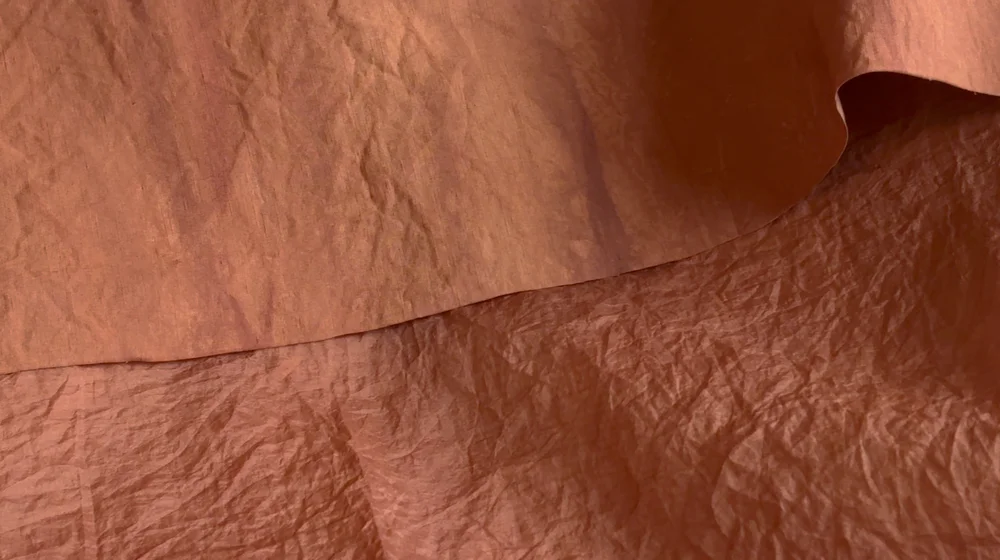
This dye is just so beautiful. I first learned about it from Maiwa’s website. I’m always searching for new ways to add texture to fabric, and this dye imparts a stunning organic, crinkly texture that almost reminds me of an Issey Miyake piece.
I’m also drawn to its versatility: it strengthens the fabric it dyes, it’s water-resistant, anti-odour and antiviral. You can get a large range of shades based on the concentration of the dye and sun exposure time, and you can also modify its tone using iron or pH. It’s used as a wood stain, health drink, and for paper.
I learned a lot about it from these sources:
Maiwa’s Kakishibu instructions
Yoshida Kaban’s page on what is kakishibu
Yoshida Kaban’s interview on kakishibu
Yoshida Kaban’s interview on kure-zome
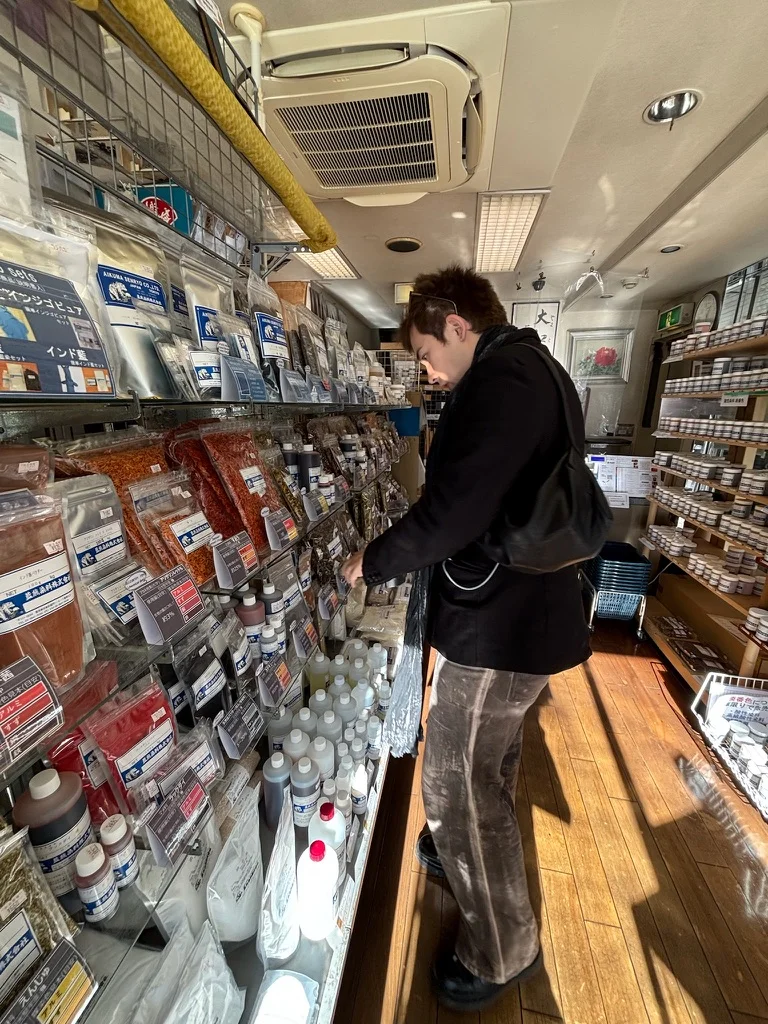 Buying kakishibu dye in Tokyo at Aikuma Senryo
Process
Unlike most other dyes, kakishibu gets darker the more it is exposed to light. You get the deep orange colour by dipping fabric in the dye solution, letting it dry and develop in the sunlight, and repeating this process.
You can shift the tone of kakishibu by dipping the dyed fabric in an alkaline solution (I usually use washing soda), which yields a brown colour on sun-exposed kakishibu, or an iron solution, which yields a green-grey on sun-exposed kakishibu, and purple-grey on non-exposed kakishibu.
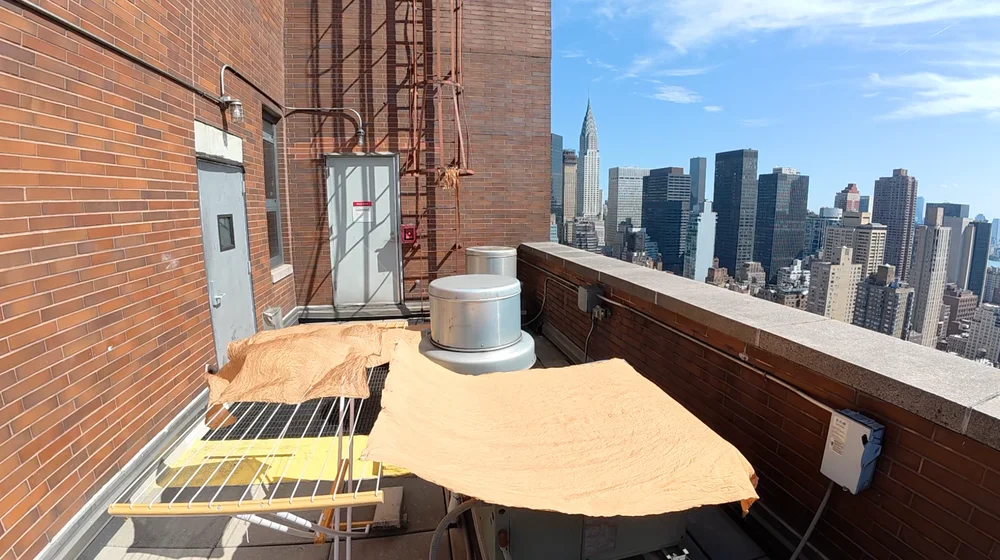 Kakishibu-dyed fabric developing on the roof of my old apartment