
Outfit for myself
August—November 2025
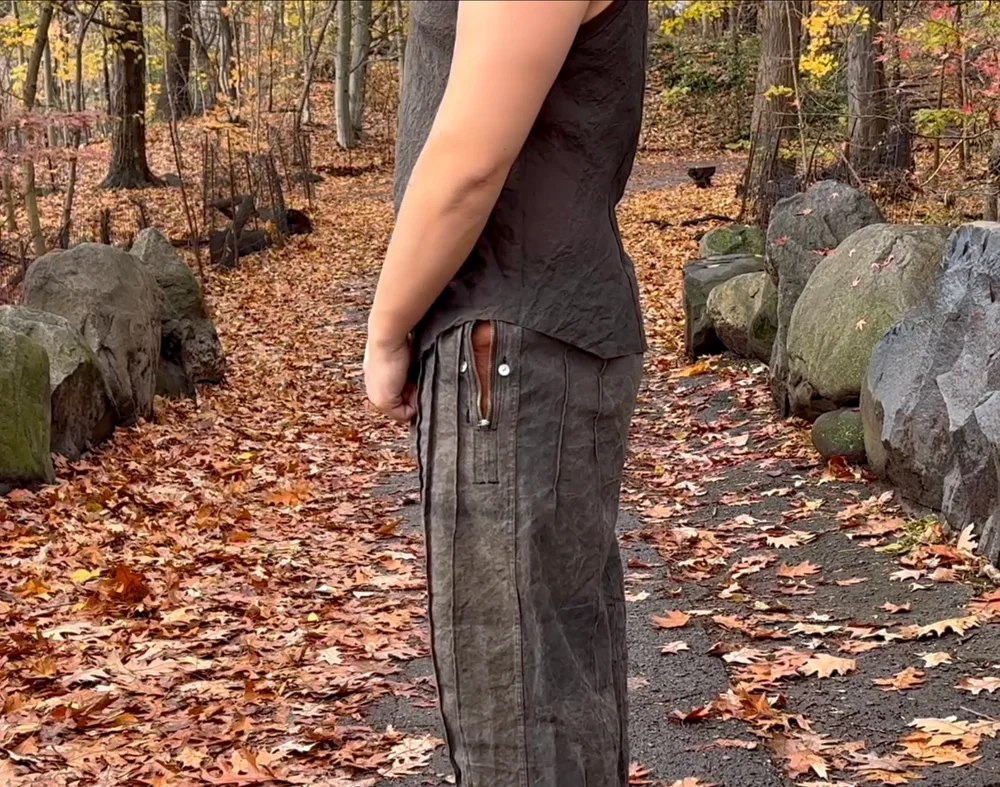
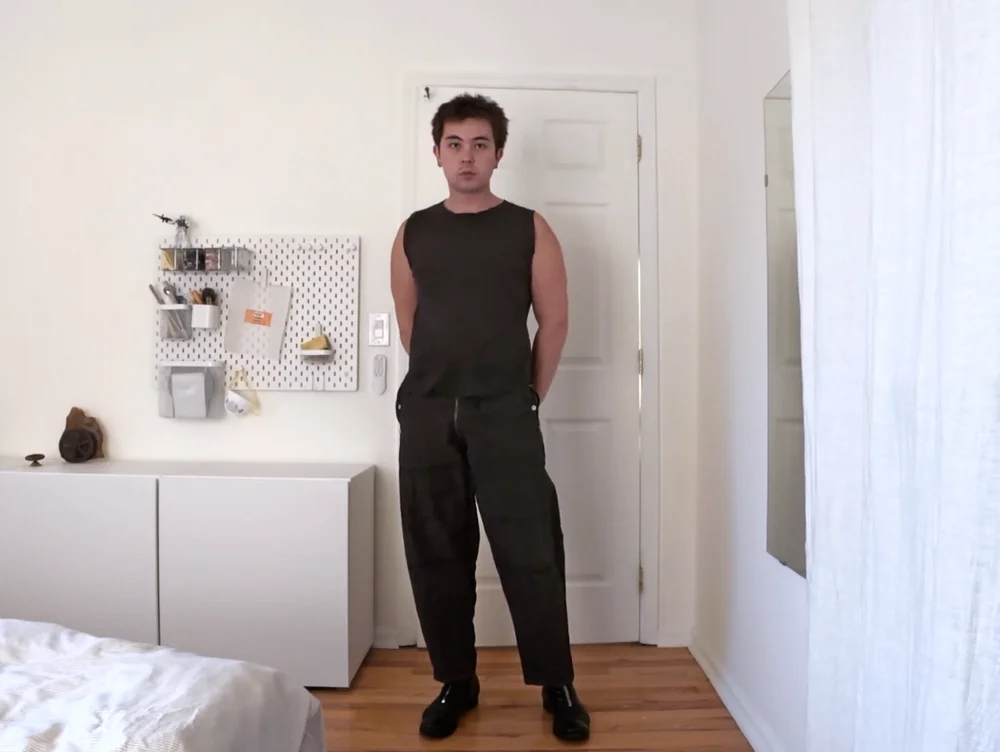
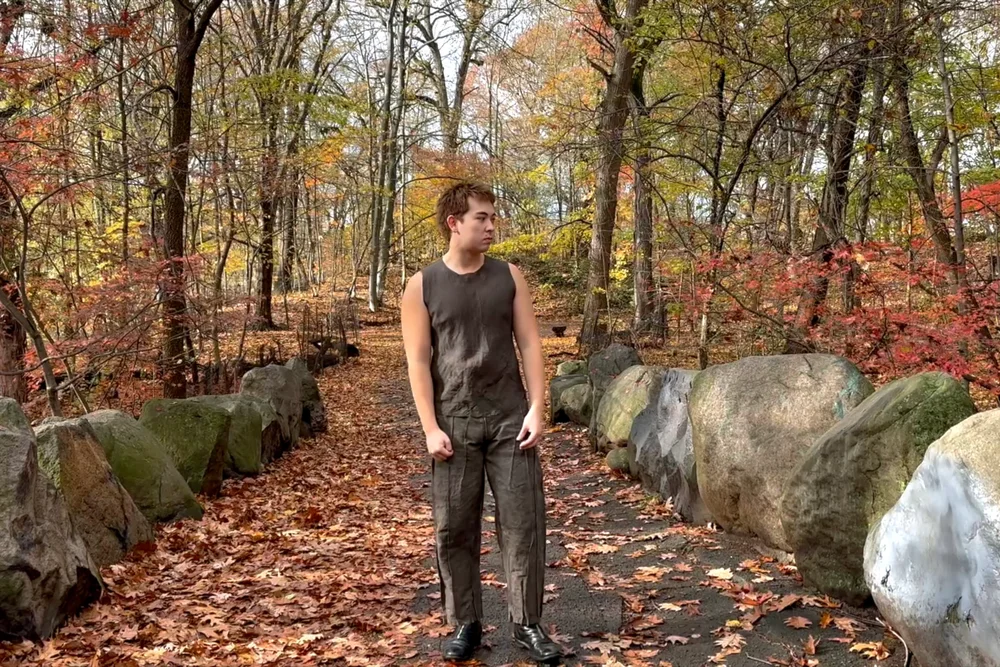
Kakishibu-dyed tank top and pants set
Top made from bias-cut handwoven plain-weave silk, Poh Poh’s black cotton thread, kakishibu dye, ferrous sulfate solution
Pants made from plain-weave slub cotton-linen, Poh Poh’s black cotton thread, kakishibu dye, dyeable zippers, ferrous sulfate solution, kakishibu-dyed sashiko thread.
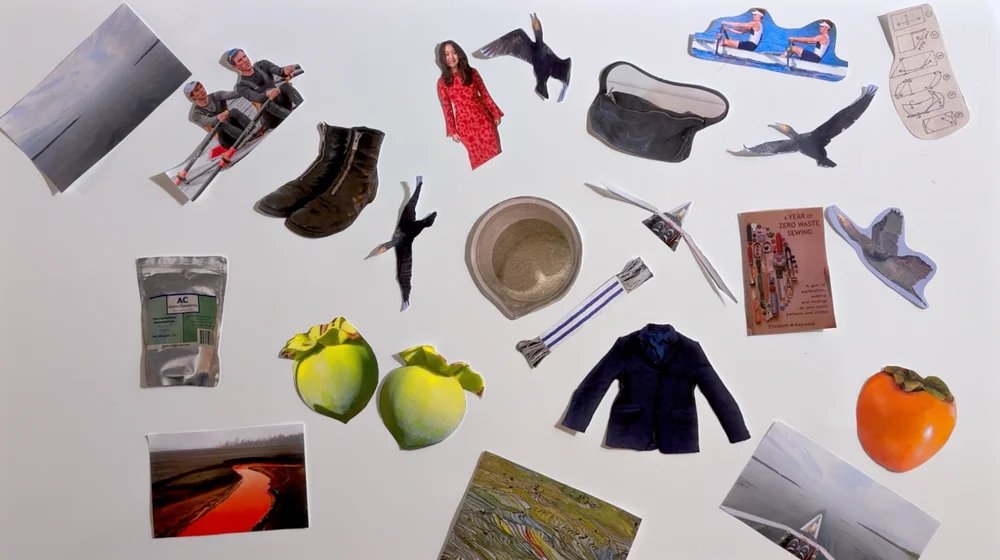
This was my first project under the Cormorant umbrella, and the video execution was more challenging than the actual creation of the clothes. There were so many concepts I tried to fit into the video, which uses the process of making “my last outfit” as a way to introduce the Cormorant project, taking the viewer on a journey across a whole range of ideas, techniques, and influences: kakishibu dye, the work of Edward Burtynsky, our collective contemporary alienation from the natural world and how things are made, Freda Huson’s teaching of “going back to your roots,” how rowing taught me to reconnect, the origins of the name “Cormorant,” Elder Bill’s teaching of the two-row wampum, zero-waste patterns, reversible garments, and low-waste bias cutting are just the concepts I could fit into the video!
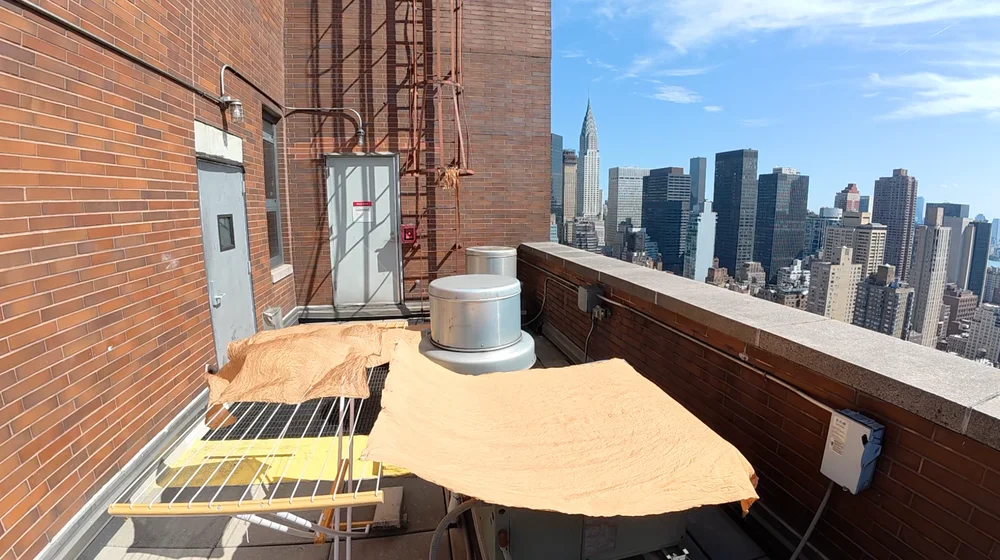
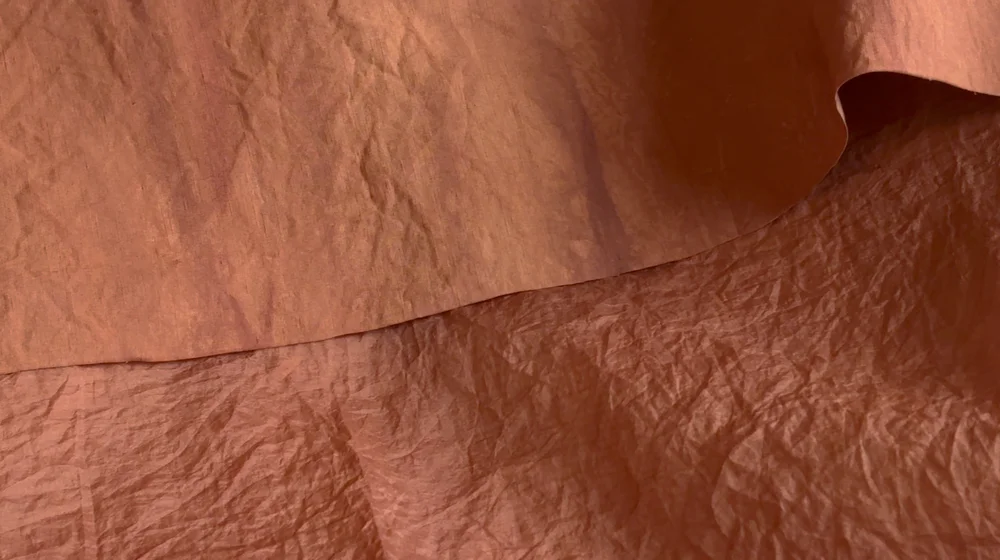
Dyeing both pieces with kakishibu dye was by far the most tedious part of the process. It took 6 weeks of almost daily work to get the clothes to a deep enough shade to be turned into a dark grey-green. Most days, I brought the fabric up to the 37th-storey roof of my old Manhattan apartment building for it to sit in the sun and deepen in shade. I performed somewhere around 6 or 7 dips in kakishibu solutions of increasing concentration, collecting every last extra drop that fell off the fabric into a pot (which sometimes required waking in the middle of the night to store the excess dye in a jar before it evaporated), before leaving it in the sun to finish drying and darken further.
I learned that:
- a greenhouse would really help (I was always afraid of seeing my hard-earned kakishibu fabric floating down onto a car driving down Park Avenue); and
- there are some processes you truly can’t rush. In a world of instant gratification, and as a software engineer by training, natural processes like kakishibu demand consistent care and attention over long periods of time. But the payoff is stunningly beautiful.
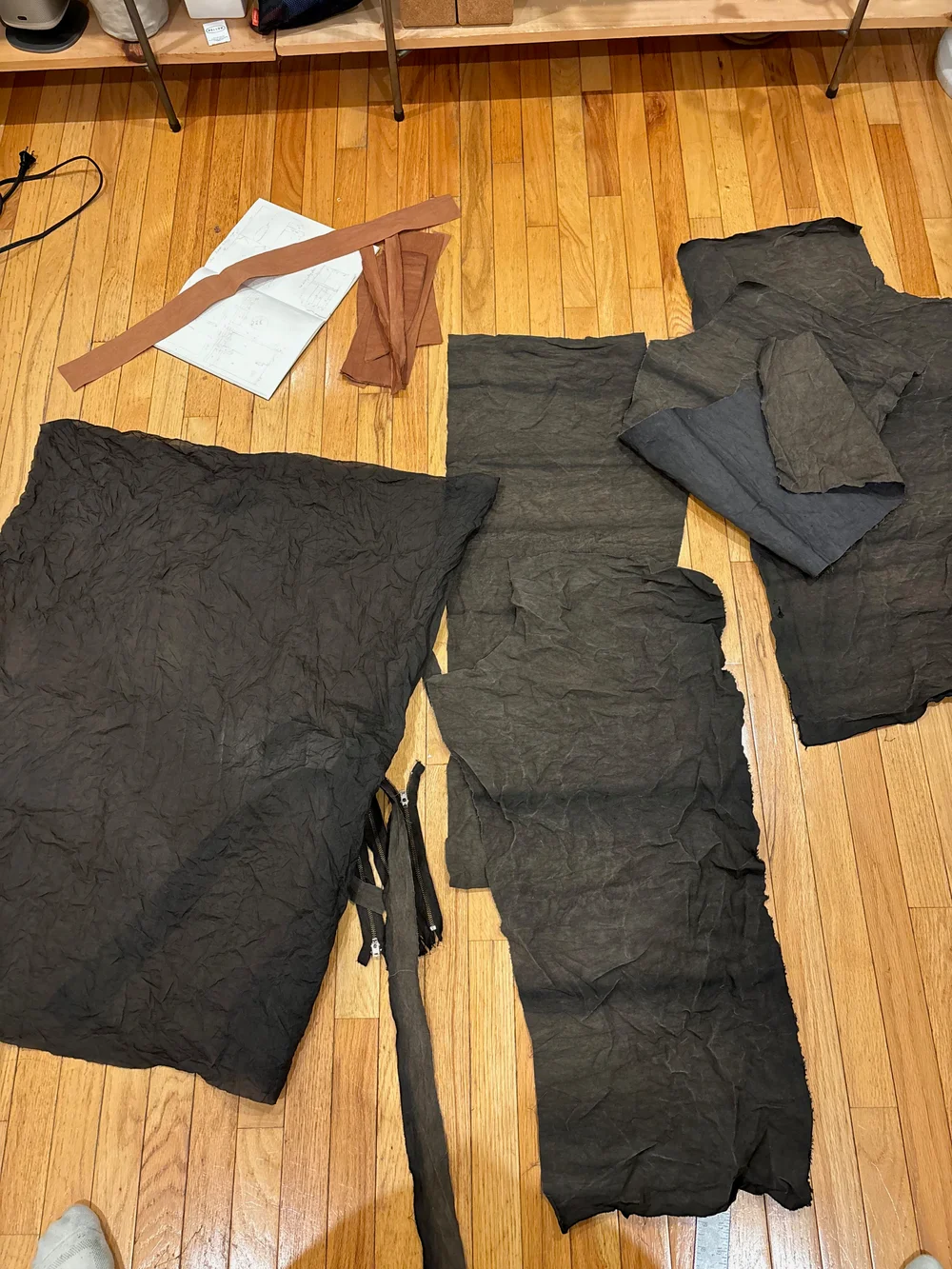
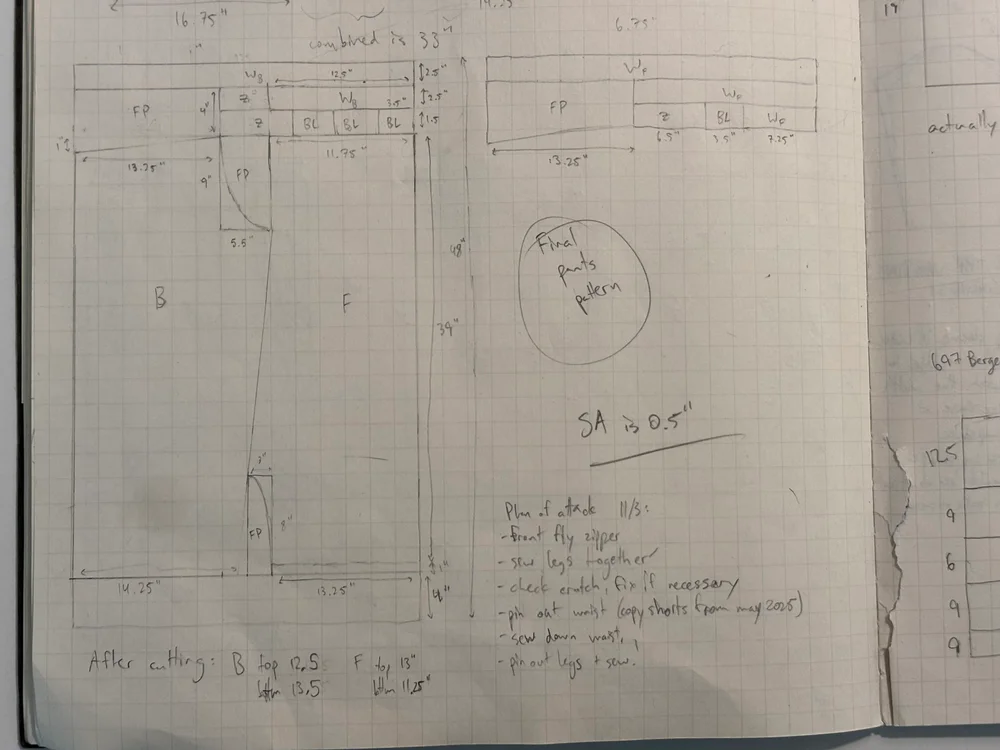
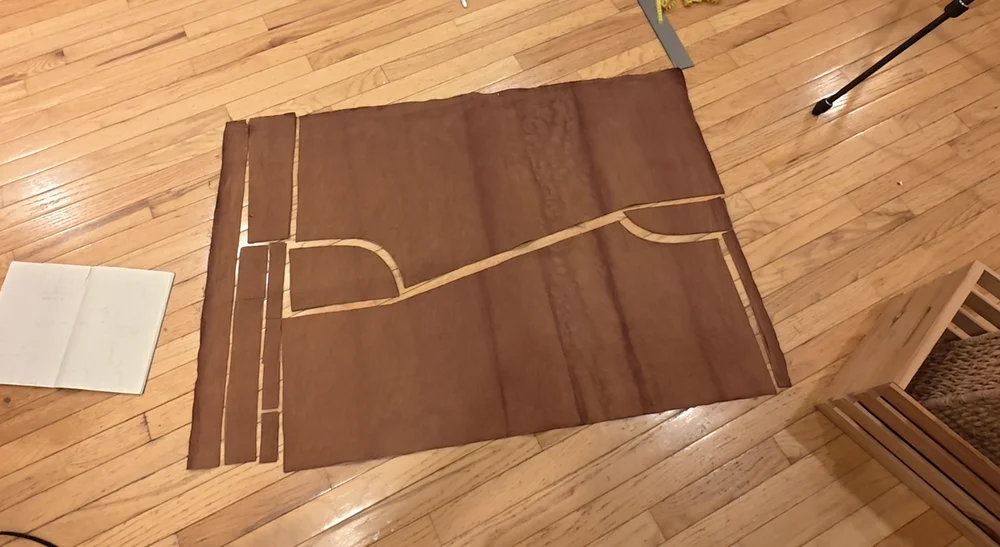
One area of inquiry I did not get the chance to discuss in the video, but was an important part of my design process, was the goal to maximize shaping while minimizing waste in pattern cutting. I’ve been experimenting with zero-waste pattern cutting since my early days learning to sew and draft patterns. I was drawn to the black magic (or cleverness) of it—that you can turn a full piece of rectangular cloth into a garment that fits a torso, or legs, or a full body. However, this is much harder than it seems, with zero-waste clothes having a propensity for bagginess or inferior fit (according to a Western eye, at least). The pants (a nearly 100% zero-waste pattern) were an experiment in using folds and darts to add shaping, both for fit and style. Likewise, the bias-cut top, while not being as zero-waste as the pants (but still low waste for a bias cut garment, leveraging Liz Haywood’s bias tube technique), was an experiment with another technique to add shaping by using the natural body-con properties of the bias cut.
I also made a major, irreversible mistake whose effects only appeared once I had finished the video: I used far too high a concentration of iron to turn the kakishibu from orange to grey. I used around 5% WOF for both the silk top and cotton-linen pants, rather than the maximum recommended concentration of 2% (still quite high, honestly) for cellulose fibers, and even lower concentration for silk fibers (which should ideally not be exposed to iron at all). The iron weakened the fibers, with the pants wearing out extremely fast. I have had to mend them (crotch blowouts, split pant seams, holes) at least 4 times in their 5 months of life at the time of writing. I barely wear the top as I know it will tear with even minor stress, the silk having been significantly weakened.
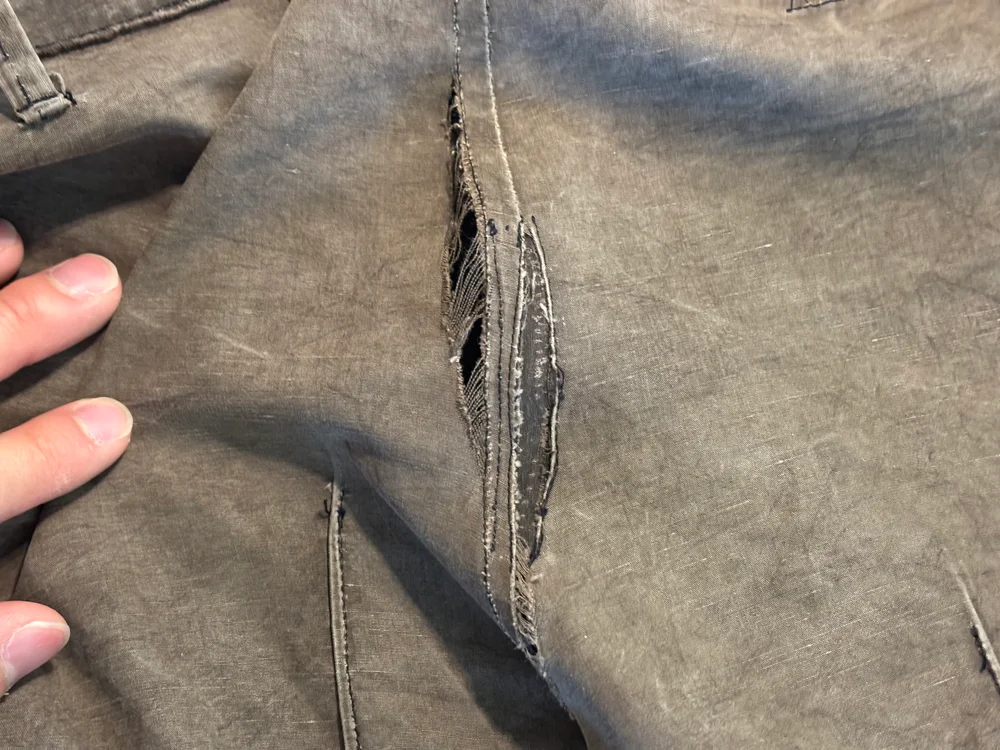
This project was also the first time I used my new (old) Singer 201-2 sewing machine from 1952. I ordered it on eBay refurbished, but it had a timing issue. I did not know this when I sewed the pants, which contributed significantly to my frustrating during that process, and nearly all of the seams began to come undone within a few weeks of completion. I re-sewed the majority of stitching lines once the timing issue had been fixed.
I love this set I made for myself. Given their significant defects, they are now unfortunately an exercise in patience, care and maintenance. When I can dye with kakishibu again, or once they have completely fallen apart beyond repair, I will probably remake them.